
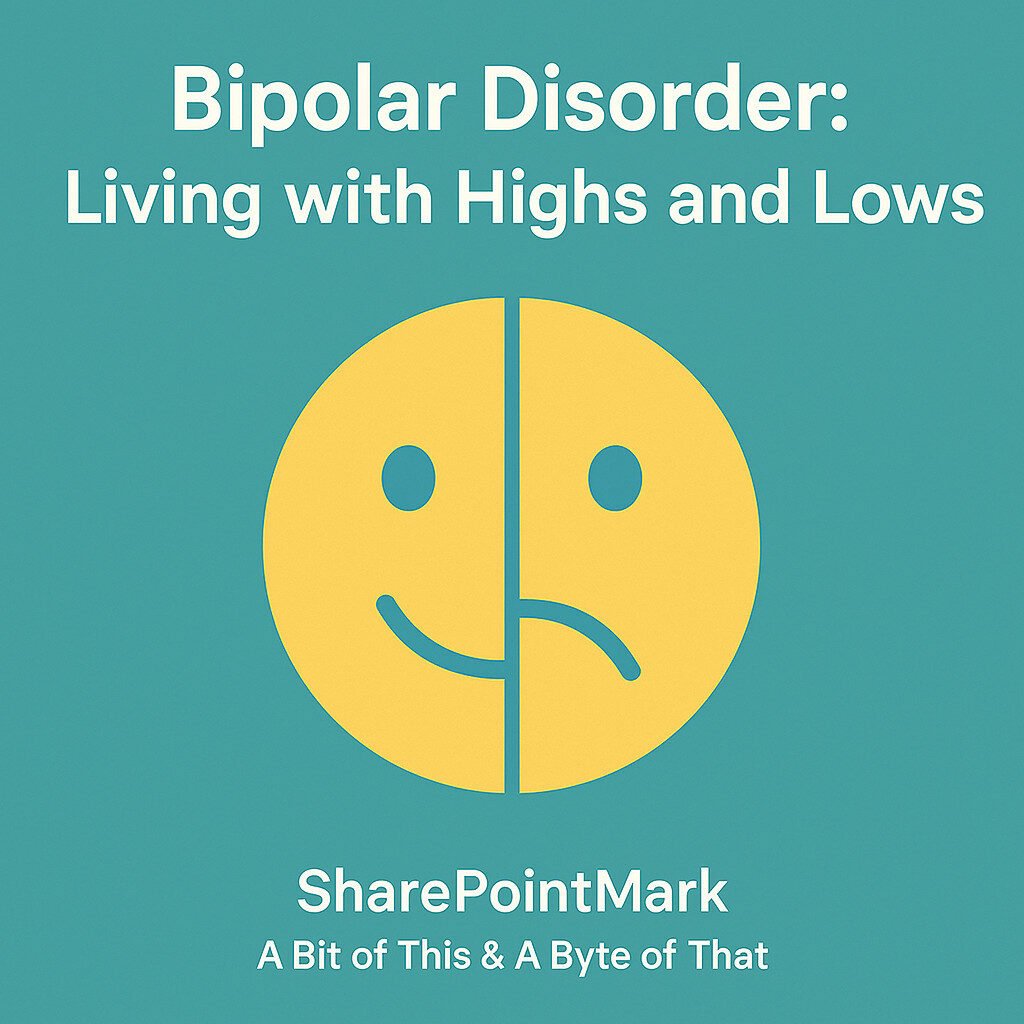
Day 54 - Bipolar Disorder: Living with Highs and Lows
What Bipolar Disorder Really Means
Bipolar disorder is one of the most misunderstood mental health conditions. Many people still think of it as extreme moodiness or unpredictability, when in fact it is a recognised medical condition with specific patterns and biological underpinnings. Understanding bipolar disorder matters because it affects around one in every hundred people worldwide, and yet stigma and confusion often prevent those living with it from seeking or receiving the support they need.
Beyond Everyday Ups and Downs
At its core, bipolar disorder is defined by changes in mood, energy, and activity levels that go far beyond the typical ups and downs of everyday life. These shifts are not brief or occasional. They can last days, weeks, or sometimes longer. They can disrupt work, relationships, finances, and health.
The two poles most people are familiar with are:
- Mania – a state of heightened energy, confidence, or irritability.
- Depression – marked by sadness, emptiness, and exhaustion.
But these simple descriptions do not capture the full picture.
Understanding Mania
Mania can be more complex than the stereotype of wild energy or reckless behaviour. Some people experience hypomania, a less intense form, where they feel energised, creative, and productive. Others may experience full mania, where racing thoughts, impulsive spending, little need for sleep, and an inflated sense of confidence can cause serious problems.
For loved ones, these periods can be confusing. Someone may suddenly seem like a different person, making choices that risk their wellbeing or finances. When the episode ends, they may be left with regret and consequences that take time to repair.
Depression Within Bipolar Disorder
Depression within bipolar disorder is often severe. It is not just feeling low. It can include overwhelming fatigue, feelings of worthlessness, loss of interest in activities, and difficulty concentrating. For some, suicidal thoughts are part of the illness.
The switch from feeling energised to deeply depressed can be shocking and difficult to manage, both for the individual and those around them.
Different Patterns of Illness
The highs and lows are not always balanced. Some people spend more time in depression than in mania. Others experience rapid cycling, moving between moods four or more times in a year. A small number may even have mixed episodes, where symptoms of mania and depression appear together.
Imagine having racing thoughts and boundless energy while at the same time feeling hopeless or suicidal. These mixed states can be particularly dangerous.
Causes and Risk Factors
Scientists continue to research the causes of bipolar disorder. It appears to be linked to a combination of genetic, biological, and environmental factors:
- Brain imaging shows differences in the way mood regulation systems function.
- Family history increases risk, though no single gene explains it.
- Stressful life events, poor sleep, or irregular routines can act as triggers.
The complexity makes it clear that bipolar disorder is not a personal failing. It is not about attitude or choice. It is an illness with biological roots that requires care and management.
Challenges of Diagnosis
Diagnosis often takes time. Because the symptoms overlap with depression, many people are initially told they have unipolar depression. It is only when a manic or hypomanic episode appears that the picture becomes clearer.
This delay in diagnosis can be harmful. If someone is treated with antidepressants alone without recognising bipolar disorder, it can sometimes trigger mania or destabilise mood further. Accurate diagnosis is therefore essential for safe and effective treatment.
Approaches to Treatment
Treatment usually combines medication and therapy:
- Mood stabilisers such as lithium can reduce frequency and severity of episodes.
- Antipsychotics are often used in managing mania.
- Antidepressants may play a role but are balanced with stabilisers.
- Therapy (CBT, psychoeducation, family-focused work) helps people understand their condition and develop coping strategies.
Routine is also important. Regular sleep, consistent daily rhythms, and stress management reduce risk. Some people keep track of their moods in a diary or app, spotting early warning signs and acting before a full episode develops.
Living With the Stigma
Living with bipolar disorder involves more than medical treatment. It involves navigating stigma. Too often, society labels people as unreliable or dangerous, when in reality most are living ordinary lives, managing their condition with courage.
Media portrayals often focus only on extremes, ignoring everyday resilience. Awareness and education help dismantle these harmful stereotypes.
Relationships and Workplaces
Relationships can be affected, especially if loved ones do not understand bipolar disorder. Education makes a difference. When family and friends learn about the signs, treatments, and ways they can support, relationships often strengthen.
Workplaces can also play a role. People with bipolar disorder are often highly creative and resilient. With adjustments such as flexible hours or supportive sick leave policies, they can thrive. Normalising conversations about mental health makes workplaces safer for all.
What Recovery Looks Like
It is important to note that recovery is not the same as cure. For many, bipolar disorder is lifelong. Recovery means learning how to live well with it:
- Finding treatments that work
- Developing routines
- Building strong support systems
Relapses may occur, but they can be managed. Recovery is not about eliminating every symptom but about building a meaningful life alongside them.
Compassion and Self-Acceptance
For those supporting someone with bipolar disorder, compassion matters. Listening, learning, and encouraging professional help often mean more than trying to fix. Simple acts such as checking in, offering company, or celebrating stability can make a huge difference.
For people living with the condition, self-compassion matters too. Accepting that bipolar disorder is not your fault and does not define your worth is key. Supportive communities, whether online or in person, reduce isolation and build resilience.
Looking Forward With Hope
As awareness grows, so does hope. Research continues to improve treatments. Campaigns challenge stigma. Conversations in workplaces, schools, and families are more common. Each step towards understanding makes life easier for those living with bipolar disorder.
Call-to-Action
Share this post to help break stigma and build awareness. Conversations about mental health belong in the open, not in the shadows.
This is a conversation for us all – people struggling and those who want to help and support.
🧭 Follow the full journey: You can catch each day’s post right here and can follow along on LinkedIn, Instagram, or Bluesky. Thank you for joining me on this journey.
🔗 SharePointMark – A Bit of This & A Byte of That
#BipolarDisorder #ItsOKtoNotbeOK #ItsOktoTalk #MentalHealth #LetsTalkMentalHealth #MentalHealthAwareness