
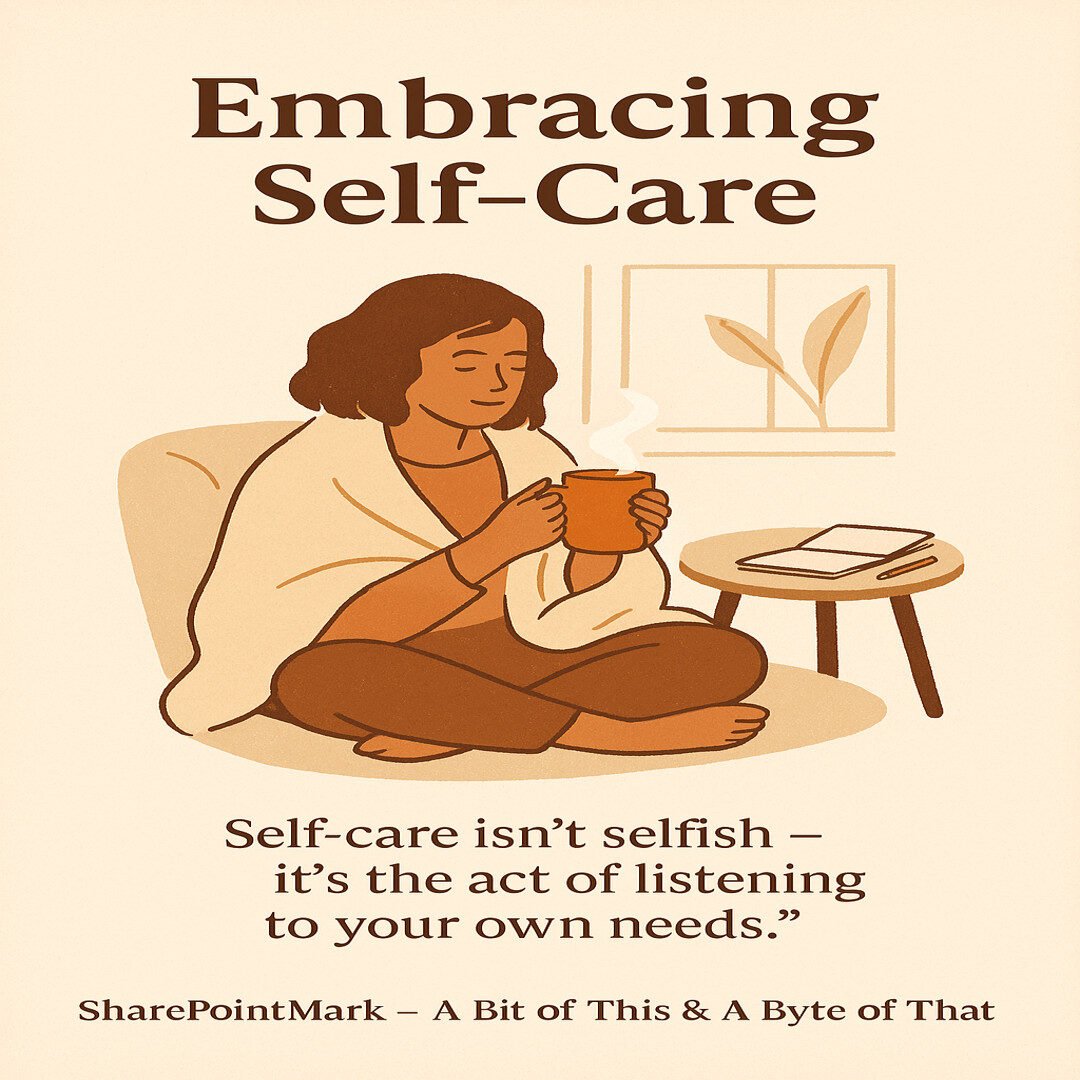
Day 2 – Embracing Self-Care
Today is Day 2 of my 90-day challenge and a journey into mental health — and the focus is on self-care.
You’ve probably heard that term a hundred times. But let’s take it back to its root.
Self-care isn’t spa days or expensive retreats. It’s noticing that you’re overwhelmed and choosing to breathe. It’s eating something nourishing even when you don’t feel like it. It’s saying “no” when you’re already carrying too much.
The Stigma of Self-Care: Why It Feels Selfish and Why It Is Not
If you have ever felt guilty about taking time for yourself, you are not alone. Many mental health supporters struggle with the idea of self-care. Society has long perpetuated the myth that being selfless is the ultimate virtue; that to truly care for others, you must always put their needs before your own. This narrative is not only harmful but also unsustainable.
Remember this: prioritising your own well-being is not selfish; it is essential.
When you neglect self-care, you risk burnout, compassion fatigue, and emotional exhaustion, all of which diminish your ability to support others effectively. In fact, the most compassionate thing you can do for someone else is to ensure you are mentally and emotionally healthy enough to be there for them.
The Guilt Trap: Struggling with Self-Care
Self-care is often misrepresented as an indulgence; bubble baths, spa days, or time away from responsibilities. While these activities can be part of self-care, they are not the whole picture. True self-care is about maintaining a balance, setting boundaries, and ensuring your own physical, mental, and emotional well-being journey is essentially realised. Yet for many people, guilt becomes a major barrier to embracing this reality:
- The Internalised Narrative of Selflessness: Mental Health Supporters (Family, Friends, Colleagues, and MHFAs) often internalise the belief that their worth is tied to how much they can give. This mindset can lead to overextending themselves, believing that stepping back, even momentarily, means they are failing the person they are supporting.
- Fear of Judgement: The fear of being seen as “selfish” or “uncaring” can prevent a person from taking time for themselves.
- “They Have It Worse” Syndrome: It is common for many to compare their own struggles to those of the person they are helping, thinking, “I shouldn’t complain – they’re the one really suffering.” This comparison minimises their own feelings and reinforces the belief that their needs are less important.
For those supporting others, self-care might look like taking a break to refill your own emotional cup. For those navigating anxiety, depression, or burnout, it might be brushing your teeth, stepping outside, or texting someone to say “I’m here”.
💬 Reflection: What’s one self-care ritual – big or small – that helps you feel steady?
These aren’t small acts. They’re daily victories. They remind us that we’re human – not machines. That we’re allowed to rest, reset, and recover.
This is a conversation for us all – people navigating difficulty and those who want to learn to help.
🧭 Follow the full journey: You can catch each day’s post right here an can follow along on LinkedIn, Instagram, or Bluesky. Thank you for joining me on this journey.
🔗 SharePointMark – A Bit of This & A Byte of That
#EmbracingSelfCare #LetsTalkMentalHealth #MentalHealthAwareness #SelfCare #DailyReflection #YouAreNotAlone