
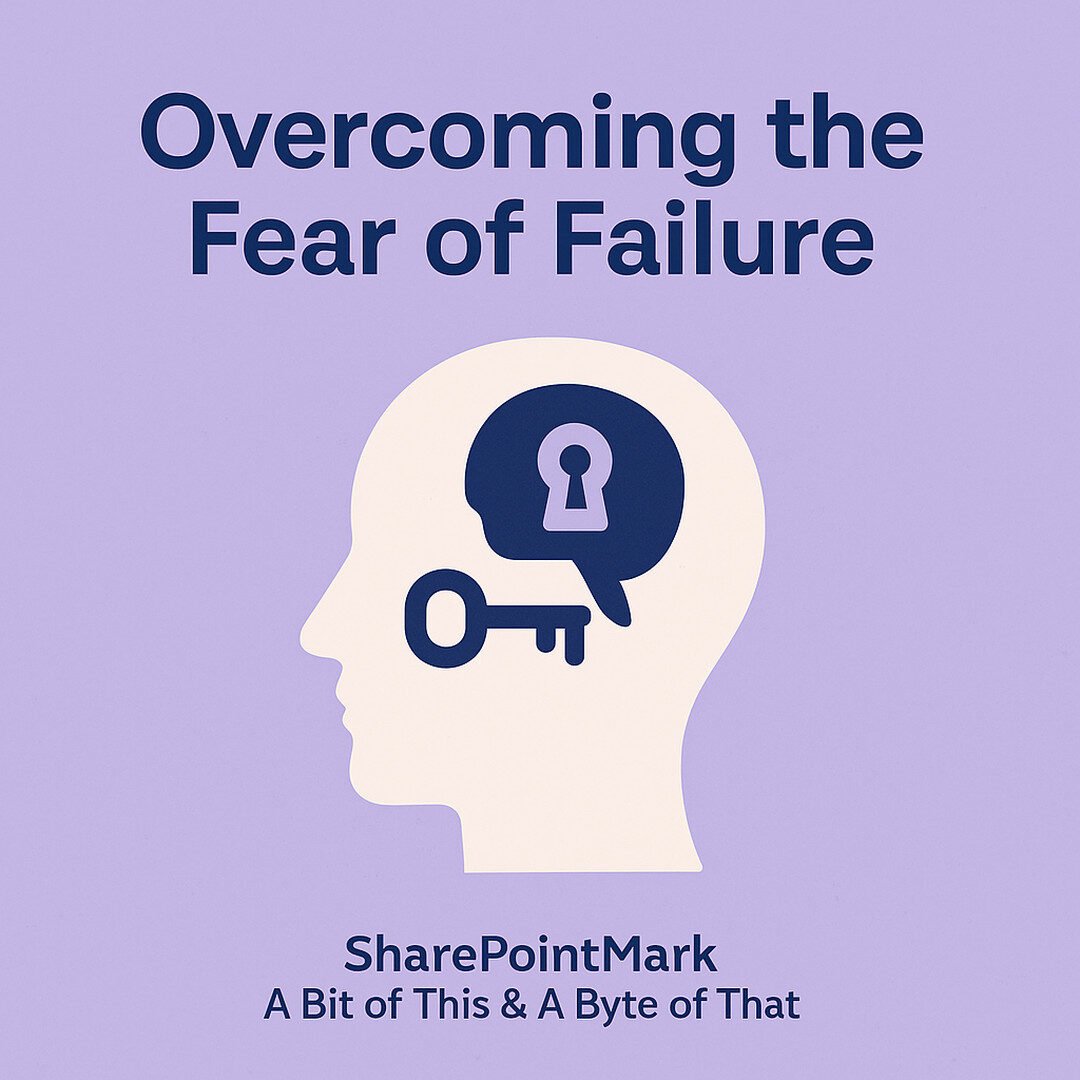
Day 29 - Overcoming the Fear of Failure
Fear of failure is a deeply human experience. It’s that quiet, persistent voice whispering:
“What if I’m not good enough?” or
“What if I mess this up?”
Sometimes, it’s so loud that it drowns out our courage before we even take the first step. While this fear can protect us from reckless decisions, it can also keep us from growth, opportunity, and self-discovery.
Recognising that fear of failure is not a personal flaw, but a shared human instinct, is the first step toward breaking its grip. We fear failing because, at our core, we want to feel safe, accepted, and capable. The problem isn’t that we fear, it’s when fear becomes the driver, dictating our choices and stalling our progress.
Why Fear of Failure Feels So Real
Neuroscience tells us that our brains react to social threats; like embarrassment or public criticism; almost the same way they respond to physical pain. That’s why “looking foolish” can feel almost unbearable. The discomfort is real, and our brains are wired to avoid it. But reframing that discomfort as a signal rather than a stop sign can help us act in spite of it.
Think about the last time you hesitated to share an idea at work, publish a creative project, or apply for an opportunity. You might have pictured the worst-case scenario:
Being judged, dismissed, or ridiculed.
Yet, most of the time, those fears are exaggerated versions of reality. When we challenge them, we often discover that the “risk” is far less damaging than we imagined.
Start Small and Redefine Failure
We often think of failure as a giant, defining event; something permanent and shameful. In reality, failure is simply data. It’s feedback about what didn’t work, information you can use to adjust and improve.
Thomas Edison famously reframed thousands of unsuccessful light bulb prototypes as valuable learning steps, each bringing him closer to success.
The key is to shrink the worrying issues. Break your big goals into smaller, manageable actions. Instead of “I have to launch a perfect project,” try “I’ll share a draft with one trusted person.” Every small step you take chips away at fear’s hold on you.
Journaling as a Tool for Clarity
Writing things down can help you see your fears for what they are – thoughts, not facts. Try this exercise:
- Write down your biggest fear.
- Ask yourself, “What’s the absolute worst that could happen?”
- Then ask, “What’s the most likely outcome?”
You’ll often find that the most likely outcome is far less catastrophic than your brain wants you to believe. From there, write down one tiny action you could take today to move forward. This shifts your mindset from rumination to progress.
Build Your Circle of Courage
Courage rarely grows in isolation. Surround yourself with people who encourage experimentation and celebrate effort, not just results. This could be friends, mentors, colleagues, or even online communities. Their belief in your potential can help silence your inner critic and push you to try again after setbacks.
If you struggle to find such people, start by being that person for someone else. Encourage a friend to share their ideas, remind them that missteps are part of learning, and celebrate their progress. Often, we find it easier to extend compassion to others than to ourselves; so flip the script and direct that same kindness inward.
Reframe Success
One of the biggest traps we fall into is tying success to perfection. We imagine that success means everything goes exactly to plan, without errors or corrections. But lasting success is built on sustained effort and the ability to adapt.
Think of an entrepreneur who launches several imperfect products, refining each one based on feedback. Over time, their progress and resilience often surpass those who wait until they have something “perfect” before sharing it.
Practical Steps to Push Through Fear
To move from theory to action, try these approaches:
- The Two-Minute Rule: Commit to just two minutes of the task you’re avoiding. Often, starting is the hardest part.
- Set Learning Goals, Not Outcome Goals: Instead of “I must get this right,” try “I want to learn three new things in the process.”
- Celebrate Attempts: Keep a “bravery log” where you note each time you acted despite fear.
- Seek Feedback Early: The earlier you invite feedback, the less pressure there is to present something flawless.
The Power of Self-Compassion
Failure can sting, but self-criticism only makes the wound deeper. Speak to yourself as you would to a friend: with understanding, patience, and encouragement. Replace thoughts like, “I’m terrible at this,” with “This is a skill I’m still developing.”
Self-compassion doesn’t mean ignoring mistakes; it means seeing them as part of the journey rather than as proof you shouldn’t be on it at all.
Take Your First Brave Step Today
Ask yourself: “What is one thing I’ve been avoiding because I’m afraid to fail?” Then, take one step toward it, no matter how small. Share your experience with someone you trust. Whether the result is a roaring success or a learning moment, you’ll have weakened fear’s hold and strengthened your own resilience.
The more often you practice this, the more fear becomes background noise rather than the director of your story. Over time, you’ll notice that courage doesn’t replace fear; it grows alongside it, giving you the strength to act even when fear is present.
Reflection
Reflect on a time when fear of failure held you back. What precise step could you take today to face that fear?
Call to Action
Share a small “brave” action you’ll take this week and tag someone who inspires your courage.
This is a conversation for us all – people struggling and those who want to help and support.
🧭 Follow the full journey: You can catch each day’s post right here and can follow along on LinkedIn, Instagram, or Bluesky. Thank you for joining me on this journey.
🔗 SharePointMark – A Bit of This & A Byte of That
#MentalHealth #FearOfFailure #Resilience #GrowthMindset #LetsTalkMentalHealth #MentalHealthAwareness