Home Modern Workplace Mastery

Modern Workplace Mastery

Modern Workplace Mastery is your hub for practical Microsoft Cloud knowledge – Microsoft 365, Teams, SharePoint, Azure and Power Platform – brought together in plain English. You’ll find three strands under one roof: My “30 Years in IT” articles, step-by-step “Modern Workplace Mastery” guides and tutorials (launching 1st December 2025), and one-off “Random” Microsoft insights drawn from real projects and workshop questions.


Everything here aims to turn strategy into delivery: identity and access done right, secure collaboration, governance that scales, automation with PowerShell and Power Platform, and the everyday practices that keep estates resilient. Posts are written for end users, leaders, administrators and educators, with clear, accurate guidance, screenshots where useful, and reasons behind the decisions.


This is a personal blog – independent of my role at Primary Technology Ltd (Bradford) and part of my journey towards Microsoft MVP accreditation.


My ethos is simple: Understand → Evolve → Transform. Start with a guidance, dip into a real-world (fictitious business) lesson from the archive, or explore a unique post when you hit a specific challenge; take what helps and make it yours.
SharePointMark Logo
Modern Workplace Mastery
Illustration of a diverse team in a calm modern digital workspace, with a stylised valley and cloud representing CalderCloud Co and the Modern Workplace Mastery series.

Modern Workplace Mastery

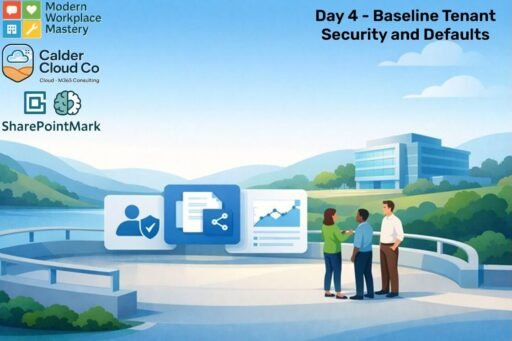
Modern Workplace Mastery: Day 4 - We stop treating Security Defaults as a forever solution and move to a small, designed Conditional Access baseline. MFA is expected, not a favour
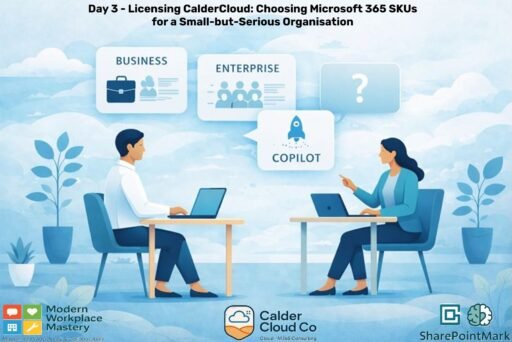
Microsoft licensing isn’t just “how do I get Word and Teams?”. It’s a set of capability bundles that quietly decide how secure you can be, how easily you can manage devices, and how painful your support queue becomes six months from now.
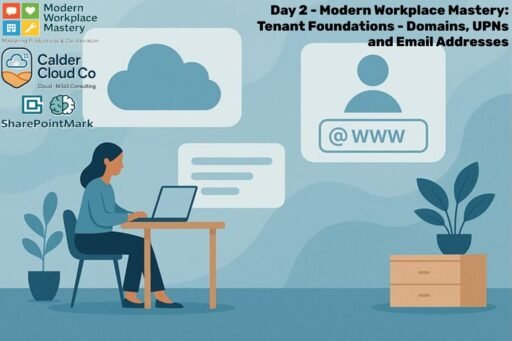
This Modern Workplace Mastery post follows CalderCloud Co as we move from “we’ve created a tenant” to “we’ve created an identity that people can trust”. You’ll leave with a practical naming standard for domains, sign-in names (UPNs), email addresses, shared mailboxes, rooms, and collaboration spaces - designed to scale for the next ten years without turning into a support nightmare.

30 Years in IT

AI is undeniably a powerful tool, but it also introduces complexities that can make decision-makers hesitant. For many organisations, the thought of AI generating content autonomously feels uncomfortable, particularly for those accustomed to tight control over their infrastructure and data.