
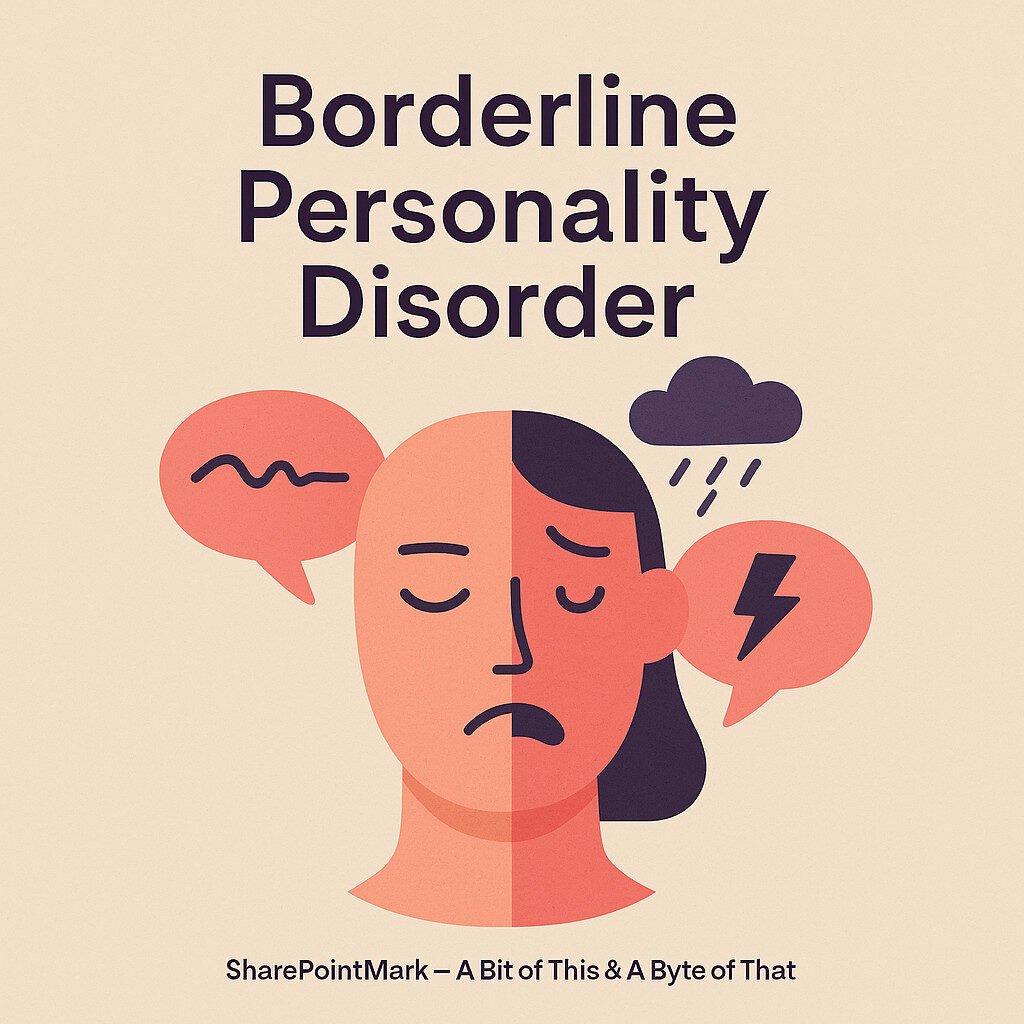
Day 63 - Borderline Personality Disorder
Borderline Personality Disorder, often referred to as BPD, is one of the most widely misunderstood mental health conditions. It is often portrayed in damaging ways, through stereotypes that paint people as manipulative, dangerous, or unstable. In reality, the truth is much more complex, and far more human.
BPD is a condition centred on difficulties in regulating emotions, forming stable relationships, and maintaining a steady sense of self. For the people who live with it, and for those who love and support them, the experience can be exhausting, frightening, and deeply painful, but also one of resilience, growth, and survival.
🧠 Living with Emotional Intensity
BPD affects how a person feels about themselves, how they relate to others, and how they navigate the world. People with BPD often live with overwhelming emotions that can shift quickly. They may experience intense episodes of anger, sadness, or anxiety that last hours or days.
This is not simply moodiness or overreaction. It is the result of a nervous system that is highly sensitive and struggles to regulate. Imagine feeling every emotional dial turned up to maximum with little ability to lower the volume. That is what BPD can feel like.
💔 Relationships and Fear of Abandonment
Relationships can be one of the hardest areas for people with BPD. On the one hand, they may crave closeness and connection. On the other, they may fear abandonment so intensely that even small changes can trigger panic or anger.
This push and pull can lead to unstable relationships, marked by intense closeness one moment and painful conflict the next. For the person living with BPD, this is not manipulation but an expression of genuine fear and need.
The emotional pain they feel is real, and their reactions often come from a place of vulnerability. Imagine waiting for a reply to a text message from someone you care about. Hours pass without a response. For many, this might be a small frustration. For someone with BPD, it can feel like proof they are being rejected, sparking spirals of panic, sadness, or anger. These reactions are not chosen but felt as deeply as physical pain.
🔎 Identity Struggles
A sense of identity can also be unstable. People with BPD may feel unsure of who they are, what they want, or where they are going in life. They might change goals, values, or careers frequently.
This can be frustrating both for them and for the people around them. It can also feed into feelings of emptiness or lack of purpose. Some describe it as feeling like a chameleon, constantly shifting to adapt to others, never truly sure of their own shape.
⚠️ Self-Harm and Suicidal Thoughts
Self-harm and suicidal thoughts are sadly common among people with BPD. These behaviours are often misunderstood as attention-seeking, but in reality, they are ways of coping with overwhelming emotional pain.
Self-harm may bring a brief sense of relief, or it may serve as a way of expressing what words cannot capture. Suicidal thoughts do not necessarily mean a person wants to die but can reflect a desperate need for the emotional pain to stop.
It is crucial that society stops labelling these behaviours as manipulative and instead sees them as signs of real suffering.
🌱 What Causes BPD?
The causes of BPD are complex and involve a combination of biological, psychological, and environmental factors. Many people with BPD report experiences of trauma, neglect, or unstable family environments during childhood.
Genetics also play a role, as does the functioning of brain systems involved in emotion and impulse control. Importantly, no single cause explains every case, and having risk factors does not mean someone will definitely develop the condition.
🚫 Stigma and Isolation
Living with BPD can be incredibly isolating. Stigma plays a large part in this isolation. Even within mental health services, people with BPD sometimes face discrimination, being described as “difficult” or “untreatable.”
This is not only inaccurate but harmful. With the right support, people with BPD can and do recover, build fulfilling lives, and maintain stable relationships.
Treatments such as Dialectical Behaviour Therapy (DBT) and Mentalisation-Based Therapy (MBT) have shown strong evidence for helping people manage symptoms and improve quality of life. These therapies focus on teaching emotional regulation, distress tolerance, and interpersonal skills, giving people tools to navigate their intense inner world more safely.
📊 How Common is BPD?
BPD is not a rare condition. Research suggests it affects around 1–2% of the population, which means many people either live with it themselves or know someone who does.
The fact that stigma is still so powerful shows how much work there is to do. Public understanding is too often shaped by sensationalist media portrayals rather than the voices of those with lived experience.
🌟 Reality
The reality is that people with BPD are not dangerous. They are not manipulative. They are human beings with deep emotional pain, and also with extraordinary strengths.
Many are highly empathetic, creative, and resilient. Living with constant emotional turbulence requires immense courage, even when that courage goes unseen.
🤝 Supporting Someone with BPD
For friends and family, supporting someone with BPD can be challenging. The intensity of the relationship, the crises, and the emotional ups and downs can take their toll.
It is important for loved ones to look after themselves as well, seeking support and setting healthy boundaries. Compassion does not mean tolerating harm, but it does mean recognising the condition as an illness, not a character flaw.
🌈 Recovery and Hope
For someone living with BPD, hope is essential. Recovery is not always a straight line. There may be setbacks, but with treatment, support, and time, people can and do find stability.
Recovery does not mean becoming someone else. It means learning to manage emotions, develop healthier relationships, and build a stronger sense of self.
We need to shift the way we talk about BPD. It is not a life sentence. It is not a label to dismiss people with. It is a condition that deserves understanding, compassion, and proper support.
By listening to those with lived experience and challenging stigma wherever we see it, we can help build a world where people with BPD are not shamed or side lined, but valued and supported.
📢 Call-to-Action
Share this post to help challenge the stigma around BPD and create space for compassion and understanding.
This is a conversation for us all – people struggling and those who want to help and support.
🧭 Follow the full journey: You can catch each day’s post right here and can follow along on LinkedIn, Instagram, or Bluesky. Thank you for joining me on this journey.
🔗 SharePointMark – A Bit of This & A Byte of That
#BorderlinePersonalityDisorder #ItsOKtoNotbeOK #ItsOktoTalk #MentalHealth #LetsTalkMentalHealth #MentalHealthAwareness